Sunday, 20 March 2016

Cell Structures and their functions

Cell Surface Membrane
  • To protect the cell from its surrounding.
  • Control changes between cell and the environment

Nucleus
  • It's a center control cell
  • Control cell growth and reproduction

Nuclear envelope
  • Has many small pores called nuclear pores to allow and control exchange between nucleus and cytoplasm
  • → Leaving = RNA & ribosomes for protein synthesis
  • → Entering = Protein(help ribosomes making), ATP(aderosine                        triphosphate) , also thyroidhormone T3.

Nucleolus
  • Primary function to assemble ribosomes,
  • Makes proteins and ribosomal RNA (rRNA) and send it to the cell to form ribosomes

Rough endoplasmic reticulum
  • Is a series of connected flattened sacs that have many ribosomes on their outer surface, which is responsible to process many proteins.

Smooth endoplasmic reticulum
  • Makes lipid and steroids.
  • e.g cholesterol and the reproductive hormones like oestrogen and testosterone.

Golgi body (Golgi apparatus or Golgi complex)
  • To collect, process, and sort molecules(mostly protein from rough ER), ready for transport either to other part of cell or export out of the cell(do secretion).

Mitochondria (including small circular DNA)
  • Responsible to carry out aerobic respiration to make ATP(Adenosine Triphosphate), High energy storage that stores every energy that we need to do our activities.
  • DNA and ribosomes are responsible for coding and synthesis of certain vital proteins.

Ribosomes (80S in the cytoplasm and 70S in chloroplasts and mitochondria)
  • The one who makes Protein, which is responsible for repairing cell damage and directing chemical processes

Lysosomes
  • Hold enzymes that first created in the rough endoplasmic reticulum, then packaged by Golgi apparatus resulting Lysosomes.
  • To digest and breakdown all types of biological polymers like proteins, nucleic acids, carbohydrates, and lipids, when they die.

Centrioles
  • Centrioles replicate during the interphase stage of mitosis and meiosis.
  • Help the movement of ciliogenesis (simply the formation of cilia and flagella on the surface of t=cells, which cilia and flagella help the cell move.)

Microtubules 
  • Filamentous intracellular structures that are responsible for movements in all eukaryotic cells.
  • In non-dividing cells, micro-tubule networks radiate out from the centrosome to provide the basic organisation of the cytoplasm & positioning of organelles
  • To produce messenger RNA, followed by the translation of mRNA by the ribosomes on order to produce protein.
  • Maintain allpha and beta tubulin to form heterodimer (protein consists of 2 different gene products)
  • Assembly and disassembly within the cell to determine cell movements (forms of cell locomotion, the intracellular transport of organelles, and the separation of chromosomes during mitosis

Chloroplasts (including small circular DNA)
  • Tiny energy factories from the sun
  • It's helping the process of photosynthesis using chlorophyll by converting the sun's energy into storage form in ordered sugar molecules such as glucose.
  • Thylakoids in choloroplasts looks like stacks of discs or coins called grana that are connected to an extensive system of tubules, they act to trap the energy from sunlight.


Cell wall

  • Protects against pathogens, dehydration, and other environmental factors, support, control, maintain, signals, interact, form and protect the organisms.
  • Able to dissolve in water and able to form long chains to support plants
  • Regulate diffusion of material through the apoplast
  • Prevents water loss, helps the osmotic regulation
  • Diffusion of gases in and out of the cell.

Plasmodesmata
  • It’s a fine strands of cytoplasm.
  • Channels through cell walls to allow molecules and substance move back and forth as needed.

Large permanent vacuole
  • A mature plant cells, surrounded by tonoplast.
  • Process and hold materials and wastes, maintain proper pressure in plant cells to provide structure and support growing plants.
  • Pigments of plant colours

Tonoplast of plant cells
  • Also called as ‘vacuolar membrane’. Usually filled with foods, and/or wastes particles.
  • Controls exchange between vacuoles and cytoplasm.


Fruit Diet is a NO NO
Fayola 11 Mendel


Ashton-Kutcher-Steve-Jobs-Portable.jpg
A well known actor named Ashton Kutcher got hospitalised for pancreatic issues after undergoing an all fruit diet, 2 days before he starts filming the “Jobs” movie.

“I went to the hospital like two days before we started shooting the movie. I was like doubled over in pain and my pancreas levels were completely out of whack. It was really terrifying… considering everything.”

Ashton Kutcher act as Steve Jobs in the “Jobs” movie. What he means by considering everything is that he was undergoing the same diet as Steve Jobs who died from pancreatic cancer in October 2011, and if he continues, he might also die.

People who do fruit dieting is also called as fruitarianism. This means that they eat fruits as their main course, snack, and mostly all the time. It’s true that people that do fruit dieting tends to loss weight without any side effects. The problem is when they do it in long term like the Steve Job case. But some people can’t even do it long enough, like Ashton Kutcher, which is good, as he realises before it’s too late.

Fruit mostly contains fructose sugars, antioxidants, vitamins, minerals and other nutrients. If people eat fruits as their only source of energy, they will lack the proteins that is very important for the body’s building blocks like hairs, nails, skins, our enzymes, even the haemoglobin needs protein. Remember the first, secondary, tertiary, and quaternary structures of amino acid that we learned in biology? We’ll die in high temperature that can cause the structures to break apart. If we lack the protein, that just means that we can’t built the structure, and die.

An all fruit diet is basically eating mostly fructose sugar. While fructose can only be processed in the liver and controlled by insulin as it is a type of sugar. But it is the type of sugar that can’t be used by our body. Instead of our cell using it, bacterias, viruses, and cancer use it for their source of energy and grow in our precious body.

In the case of Ashton Kutcher and Steve Job, Their pancreas might get damaged by fructose as their body needs a lot of insulin to control their sugar level, making it tired and become a disease. Fructose is also said to be seven times more reactive to proteins and polyunsaturated fats than glucose, resulting advanced glycation end product, which can create an oxidative damage to our body.

People try to avoid sodas because sodas are bad. One of the reasons sodas are bad is because they contain a lot of fructose. Even though fruits are natural resources from our earth, It doesn’t mean that the fructose in fruits are different with the fructose in the sodas. Fructose is fructose, they are the same because their structures, use, effect, and all about it are the same. This means consuming fruits means we also consume fructose, same with sodas. However it doesn’t mean that fruits are unhealthy, they are healthy and is nutritious and the amount of fructose in fruits are lesser than in sodas. But if we eat it as our daily main courses, snacks, and mostly all the time, like the fruitarianism does, the fructose amount in our body will definitely increase and be a danger to our body. Therefore fruit diet is a no no, especially for a long time fruit diet and an all-fruit diet.


RESOURCES

American Dieting Association. (2006). Facts About Fructose. Retrieved on 16th March, 2016, from http://www.fructose.org/pdf/ADAFructosefactsheetfinal.pdf

Dr Axe. (n.d). Are All Fruit Diet Dangerous to Your Health?. Retrieved on 16th March, 2016, from http://draxe.com/are-all-fruit-diets-dangerous-to-your-health/

Dr Mercola. (2013). Surprising Health Hazards Associated with All-Fruit Diet. Retrieved on 16th March, 2016, from http://articles.mercola.com/sites/articles/archive/2013/02/11/all-fruit-diet.aspx

Matthews, M. (2015). Do Fructose and Fruit Make You Fat and Unhealthy?. Retrieved on 16th March, 2016, from

Paleo Leap. (n.d). 10 Reasons Why Fructose Is Bad. Retrieved on 16th March, 2016, from

Rieske, K. (2004). Scientific Proof Carbohydrates Cause Disease. Retrieved on 16th March, 2016, from

Wilson, J. (2013). What’s the danger of an all-fruit diet?. Retrieved on 16th March, 2016, from
http://edition.cnn.com/2013/01/29/health/steve-jobs-all-fruit-diet/

Haemoglobin

1. Describe the difference between structural(Fibrous) and globular protein (in term of structure and function)

Fibrous (scleroproteins)
Globular
Structure
Strand-like structure
Insoluble in water, bases, acids, etc.
Helical/Sheet Structure
Stronger Bond (Forces of attraction)
Spherical like structure
Soluble
3D Shape
Weak Bond (Hydrogen Bond)
Function
Only act as structural proteins
Form Enzymes
Cellular messengers
Amino acids
Example
Keratin(hair, horns, nails, feathers), Collagen and elastin
Hemoglobin

2. Describe the difference between normal hemoglobin with sickle cell anemia hemoglobin (Abnormal).
a. The structure of amino acid , changes in amino acid, changes in 3D structure (Tertiary
   or Quaternary)
b. Changes in function (compared with normal Hemoglobin)


Hemoglobin A = Normal
Hemoglobin B = Sickle Cell Anemia
Difference in position of peptide
Differed from normal hemoglobin by single amino acid, which is the number 6 position in beta chain of hemoglobin is different. Valine is hydrophobic, means that it doesn't like water, and choose to be as far as it can with the water, making the 3D structure of hemoglobin into another shape, half moon shape, instead of circle shaped, and so is called as sicle-cell anemia.  


Normal = 2 alpha and 2 beta chains
Sickle cell anemia = 2 alpha and 2s chains


CHANGE IN FUNCTION


The abnormal one:
  • Interrupt the flow in blood vein because of their  
           structure
  • They don’t carry oxygen maximally.


Bibliography

MajorDifferences. (2015). Difference Between Globular and Fibrous Proteins. Retrieved 9th September, 2015, from http://www.majordifferences.com/2013/02/difference-between-globular-and-fibrous.html

National Hear, Lung, and Blood Institute. (2015). What Is Sickle Cell Disease?. Retrieved 9th September, 2015, from http://www.nhlbi.nih.gov/health/health-topics/topics/sca

Natural Science Learning Center. (2003). The Molecular Biology of Sickle Cell Anemia. Retrieved 9th September, 2015, from http://www.nslc.wustl.edu/sicklecell/part2/molecular.html

rachita. (2014). Difference between globular protein and fibrous proteins. Retrieved 9th September, 2015, from http://www.differencebetween.net/science/health/difference-between-globular-protein-and-fibrous-proteins/

Understanding Evolution. (n.d). A Case Study of the effects of mutation: Sickle cell anemia. Retrieved 9th September, 2015, from http://evolution.berkeley.edu/evolibrary/article/mutations_06

Carbohydrates


Divided into 3 stages:

1. Monosaccharides


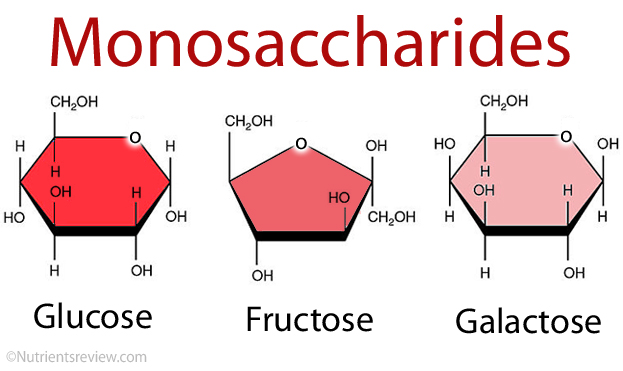
The simplest form of sugar, with has only one sugar molecule, with general formula of (CH2O)n.The name of sugar molecules ends with       "-ose". Common sugar molecules that have 6 carbons(Hexoses) are glucose, fructose, and glactose. Common sugar molecules that have 5 Carbons(Pentoses) are Ribose and deoxyribhose. All their structures are in the picture above, Make sure you guys can recognize them, because some questions in your test might require you to draw them...


2. Disaccharides
Image result for disaccharide
They are also sugars but they are consist of 2 sugar molecules that has undergone condensation process and formed glycosidic bond between them. The process itself is removing the -OH in one of the molecule, and hydrogen in -OH of the other grup, forming water and thus the glycosidic bonding.


3. Polysaccharides 

Amylose a-1,4 linkage only
Amylopectin a-1,4 and a-1,6 linkages

It's "a convenient, compact, inert and insoluble molecule" as organism's energy storage. Poly means many. It's a combinations of a thousands of monosaccharides, forming a macro-molecules with glycosidic bond. 

Starch -> storage polysaccharides formed in plants
Consist of both amylose and amylopectin

Glycogen -> storage polysaccharides formed in animals
Consist of only amylopectin and the structure is said to be more branched to form muscles like in heart and also liver muscles. 

Note: I got all the pic from the Google pic, and for the information, I got it from my text book